KARRIEREMESSE
Persönlich mit Arbeitgebern sprechen


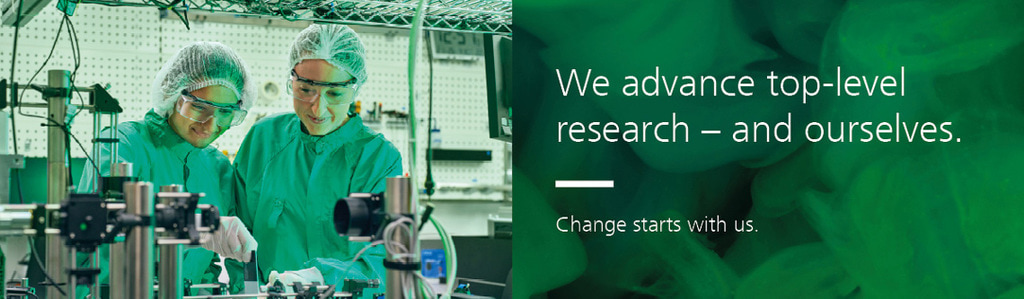
The Fraunhofer-Gesellschaft is one of the world's leading organizations for application-oriented research. 75 institutes develop pioneering technologies for our economy and society - more precisely: 32 000 people from technology, science, administration and IT. They know: Anyone who comes to Fraunhofer wants to and can make a difference. For themselves, for us and for the markets of today and tomorrow.
The High Resolution and Automated Microscopy department is part of the Fraunhofer Translational Neuroinflammation and Automated Microscopy TNM, the Göttingen site of the Fraunhofer Institute for Translational Medicine and Pharmacology ITMP.
Our primary focus at the Fraunhofer TNM is on testing, refining, and establishing state-of-the-art super-resolution microscopy techniques in the context of biologically and disease-relevant questions. We apply these advanced imaging technologies to clinically meaningful model systems in order to evaluate their robustness, scalability, and added value for translational research. By combining super-resolution microscopy with genome editing and advanced image analysis, we systematically assess how these methods can reveal disease-associated cellular phenotypes at unprecedented spatial resolution.
Working in close collaboration with clinicians and industry partners, our goal is to validate and standardize these technologies so that they become fully implementation-ready for future drug discovery and pharmacological research. Among these approaches, MINFLUX represents a particularly powerful recent development. MINFLUX is a revolutionary microscopy technique that enables unprecedented optical and temporal resolution. Recent research has shown that this method is particularly well suited for analyzing protein motion, for example, in mitochondrial membranes. This project aims to use state-of-the-art 3D MINFLUX tracking to follow singly labeled sparse cargo proteins in living cells and study their transport to and import through the TOM complex.
PhD students have the opportunity to participate in one of several PhD programs in collaboration with the University of Göttingen. Candidates will have the possibility to present their work at conferences and publish in scientific journals. Through close cooperation with the Max Planck Institute for Multidisciplinary Science, our excellence in microscopy, and our interdisciplinary organization, we have access to a broad range of techniques and facilities.
Ready for a change? Then apply now and make a difference! Once we have received your online application, you will receive an automatic confirmation of receipt. We will then get back to you as soon as possible and let you know what happens next.
If you have any questions about the application process, please contact:
Prof. Dr. Stefan Jakobs
sjakobs(at)gwdg.de
For more insights into our institute's work, visit us at: www.itmp.fraunhofer.de/de/institut/standorte/goettingen.html
This project will be carried out in close collaboration with the Max Planck Institute for Multidisciplinary Sciences MPI NAT in Göttingen. Information about the research of Prof. Dr. Stefan Jakobs at the MPI NAT can be found at: www.rsfp.de
Fraunhofer Institute for Translational Medicine and Pharmacology ITMP
www.itmp.fraunhofer.de
Requisition Number: 83761
The weekly working time is 39 hours. This position is also available on a part-time basis. We value and promote the diversity of our employees' skills and therefore welcome all applications - regardless of age, gender, nationality, ethnic and social origin, religion, ideology, disability, personal orientation and identity. Severely disabled persons are given preference in the event of equal suitability. Our tasks are diverse and adaptable - for applicants with disabilities, we work together to find solutions that best promote their abilities. Appointment, remuneration and social security benefits based on the public-sector collective wage agreement (TVöD).
With its focus on developing key technologies that are vital for the future and enabling the commercial utilization of this work by business and industry, Fraunhofer plays a central role in the innovation process. As a pioneer and catalyst for groundbreaking developments and scientific excellence, Fraunhofer helps shape society now and in the future.

€ 57.708

Wie viel ist das netto? Berechne es mit unserem Brutto-Netto-Rechner.
Von-Ossietzky-Straße 100
37085 Göttingen
Niedersachsen
Deutschland