










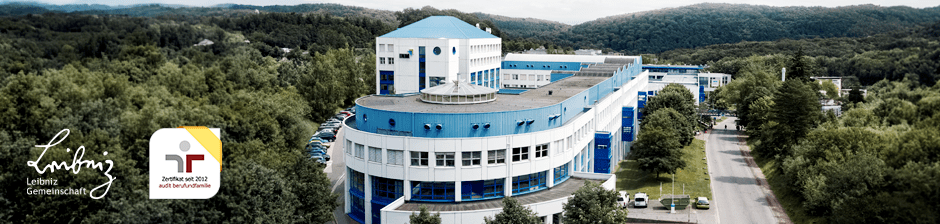
INM - Leibniz Institute for New Materials is located in Saarbrücken, Germany, and is an internationally leading center for materials research, a scientific partner to national and international research institutions, and a provider of research and development for companies throughout the world. The INM is an institute of the Leibniz Association and has about 250 employees.
The Marie Sklodowska-Curie Doctoral Network “e-ChemIn: ElectroChemical Interfaces for energy conversion and storage: towards a carbon neutral society" is recruiting 15 Doctoral Candidates (DCs). The e-ChemIn network brings 12 academic and 6 industrial partners from 9 countries formed an international, interdisciplinary and inter-sectoral team. 15 Doctoral candidates will enjoy a multi-disciplinary and international environment with plenty of training opportunities and exchange with all labs involved in the Network.
Scientific background
The climate targets set by the EU with the goal of climate neutrality by 2050 require a transformation of all sectors of the economy towards the use of renewables-based electricity, calling for joined forces between EU countries in order to achieve a more resilient energy system. In the e-ChemIn we are united by the idea of applying a new paradigm in designing energy devices, which shifts the current approach of creating individual materials towards engineering electrochemically ACTIVE MATERIALS INTERFACES. Working together we will: 1) design multiple sets of electrochemical interfaces using renewable, abundant, and circular materials and optimize them for new generations of energy conversion and storage devices. Created lab-scale prototypes which outperform characteristics of current benchmarks and will be ready for further developments at high TRLs (5-9); 2) develop multimodal approaches for the characterization of interfaces operando at the nanoscale, providing unprecedented insights into interfaces in action and making the characterization of active interfaces accessible to the broader scientific community; 3) successfully establish processes for the recovery of critical raw materials from end-of-life devices and apply them at the industrial scale.
JOIN OUR NETWORK!
MSCA-DN e-ChemIn - Doctoral Candidate (DC15): Sustainable sodium-ion batteries: engineered solid-liquid and solid-solid-liquid interfaces with recyclable components (f/m/d)
Job description - Objective
The aim of this doctoral projectat INM is to develop sustainable, fluorine-lean liquid electrolytes for sodium-ion batteries and to quantify how electrolyte composition and formation protocols govern SEI/CEI formation and ion transport at solid-liquid interfaces. The Doctoral Candidate will benchmark conventional carbonate- and ether-based electrolyte systems using NaPF6 and NaFSI and will design safer fluorine-free or fluorine-lean alternatives, for example based on NaBOB, low-toxicity solvents, and functional additives. The work will be guided by green-chemistry and circularity criteria and will focus on the rational engineering of solid-liquid and solid-solid-liquid interfaces in Na-ion battery cells.
A central part of the project will be the development and validation of tailored formation procedures, including current, voltage, temperature, and pre-conditioning protocols. These protocols will be correlated with initial Coulombic efficiency, impedance growth, capacity retention, and interphase stability for selected anode/cathode combinations. Multimodal analysis and advanced electrochemical diagnostics, in collaboration with DC#3 and DC#5, will deliver descriptors linking solvent, salt, additive, and conditioning choices to interphase chemistry, morphology, and transport at solid-liquid and solid-solid-liquid interfaces.
Expected results
(1) A ranked electrolyte and additive matrix for Na-ion cells, including sustainability and safety assessments.
(2) Validated and transferable formation protocols that maximize initial efficiency and minimize impedance growth for carbonaceous anodes and selected cathodes.
(3) An open standard operating procedure and data package providing standardized electrochemical and interphase descriptors for screening and device optimization across the e-ChemIn network.
The selected candidate will be required to enroll in a PhD program at Saarland University.
Main supervisor: Prof. Volker Presser, Head of Energy Materials Group, (INM, https://www.leibniz-inm.de/forschung/forschungsgruppen/energie-materialien)
Co-supervisor:Dr. Rosalia Cid (CICE, https://cicenergigune.com/en/rosalia-cid-barreno)
Co-supervisors from secondments:
Prof. Sergey Dvinskikh, KTH Royal Institute of Technology
Dr. Pavel V. Yushmanov, P&L Scientific AB
Benefits
The Doctoral Candidate will stay 4 months at KTH Royal Institute of Technology, Sweden, to use NMR methods to quantify ion transport and interphase signatures. The Doctoral Candidate will also stay 3 months at P&L Scientific AB, Sweden, to work on robotic electrolyte formulation and high-throughput cell assembly and conditioning.
Applicants must not already hold a doctoral degree at the date of recruitment and not have resided or carried out their main activity (work, studies, etc.) in Germany for more than 12 months in the 36 months immediately before the recruitment date.
Eligibility will be verified at the time of recruitment.
Skills / Experience
- Master’s degree or equivalent in Materials Science, Electrochemistry, Chemistry, Applied Physics or closely related disciplines.
- Languages: Excellent communication and writing skills, thorough command of the English language.
- Good knowledge of electrochemistry, materials science
- Skills in experimental electrochemistry and electrochemical technologies
- Experience with material characterization using electron microscopy and/or spectroscopy techniques and corresponding data interpretation will be an advantage
- Ability to work as a member of an international, multi-disciplinary team
- German language knowledge is very beneficial.
Salary - other benefits - duration
The salary will comply with the rules of the 2025 MSCA Doctoral Network program under Horizon Europe and consists of:
- a living allowance (country correction coefficient applies)
- a mobility allowance (€710/month)
- and, if applicable, a family allowance (€660/month).
All amounts are subject to national taxation and social security regulations.
other benefits:
- Social Security coverage
- Training, Networking and secondment opportunities
- Career Development plan.
The position is funded for 36 months under the MSCA Doctoral Network. The total contract duration is 36 months. More information under https://euraxess.ec.europa.eu/jobs/search - Search: e-ChemIn
Start date: From 01.11.2026 but not later than 01.04.2027
Contract: Full-time employment contract in accordance with national regulations.
Working hours: full time (39.5 h / per week)
Contact - Application
Place of work: INM - Leibniz Institute for New Materials is located in Saarbrücken, Saarland, Germany, Campus D2 2 in DE - 66123 Saarbruecken.
The knowledge of German is a plus but not a requirement as English is a main working language at INM.
Applicants must submit the following, specifying MSCA-DN e-ChemIN (DC15)
- CV (including a detailed description of residence and main activities over the last 3 years)
- Motivation letter
- Copies of academic degrees.
- Contact details of 3 referees.
Deadline: 20.09.2026
Recruitment will follow the MSCA Doctoral Network principles of
- Open, transparent and merit-based selection
- Equal opportunities and non-discrimination
- Evaluation by a qualified selection committee
Shortlisted candidates may be invited for interviews. The selection process will be properly documented in accordance with MSCA requirements.
The INM practices an open and appreciative corporate culture in which the existing diversity is promoted and lived. The institute is an equal opportunity employer with a certified family-friendly policy, and it provides offers for a better work-life balance, flextime, and mobile working. We promote professional opportunities for women and strongly encourage them to apply. People with disabilities are expressly encouraged to apply and will be given priority if equally qualified.
This will receive funding from the European Union’s Horizon Europe research and innovation program under the Marie Skłodowska-Curie grant agreement No. 101311389

