














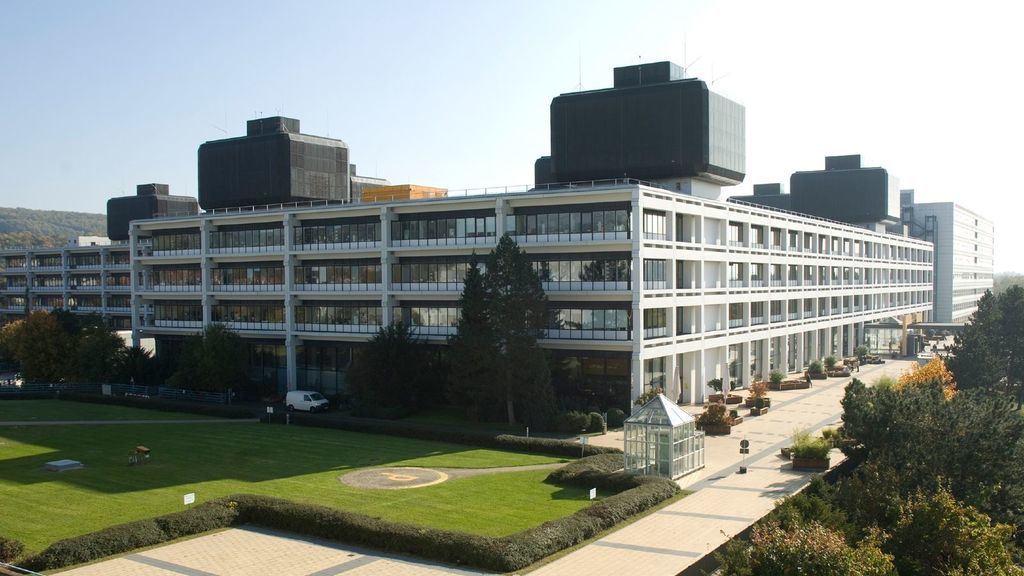
The University Medical Center Göttingen (UMG) unites the Medical Faculty of the Georg-August University and the University Hospital in an integration model. With around 9,700 employees, the UMG and its subsidiaries are one of the largest employers in the region. Our clinics and institutes stand for high-quality patient care, excellent research, modern teaching and transfer of innovative technology.
Göttingen as a city of science is located in the center of Germany and the University Medical Center Göttingen is integrated into an attractive network of university and non-university scientific institutions.
The Institut für Zelluläre und Molekulare Immunologie of the University Medical Center Göttingen is looking for a new position for the earliest start date
PhD student (f/m/d)
part time , 25 hours per week, Position limited for 2 years with the possibility of an extension
Remuneration according to TV-L
Our research focuses on the role of MiT/TFE family transcription factors in the regulation of immune responses and their contribution to the pathogenesis of autoimmune diseases, particularly multiple sclerosis (MS). Using the experimental autoimmune encephalomyelitis (EAE) mouse model, we investigate how these transcription factors govern the delicate balance between protective immunity and pathological autoimmunity.
The position is funded within the framework of the TRR274. As part of the TRR274 (project A08 "Deciphering the heterogeneity of B-lymphoid subpopulations impacting on CNS recovery from acute multiple sclerosis bouts") and the Göttingen Campus, you will be embedded in a vibrant and interdisciplinary research environment with strong collaborations.
Your tasks
- Conduct an independent, hypothesis-driven research project on the role of MiT transcription factors in neuroinflammation and autoimmunity
- Process and analyze primary human and mouse samples
- Perform EAE experiments, including disease monitoring and sample collection
- Investigate how transcriptional programs in B lymphocytes shape immune responses and contribute to neuroinflammation in human MS and EAE
- Explore how these genetic programs balance B cell selection and activation, ensuring effective immunity while actively suppressing autoreactive B cell responses
- Apply advanced flow cytometry and imaging flow cytometry to assess immune cell phenotypes, activation states, and subset-specific nuclear translocation of transcription factors
- Conduct genetic analyses, including RNA sequencing, ATAC-seq and Cut&Run
- Present findings at national and international scientific conferences
Your qualifications
- A Master-s degree (MSc) in life sciences, immunology, molecular biology, biomedicine or a closely related field
- Strong background in immunology, with a particular interest in neuroimmunology and autoimmune diseases
- Solid hands-on experience with standard molecular and cellular biology techniques
- Experience with flow cytometry (panel design and data analysis) is highly desirable
- Prior experience with animal experimentation (especially EAE model) and FELASA-B certification (or equivalent) is an advantage
- Familiarity with bioinformatics and analysis of high-throughput data (RNA-seq, ATAC-seq, Cut&Run) is highly welcome
- Strong motivation to work independently and collaboratively in an interdisciplinary team
- Excellent communication skills and fluency in English (written and spoken)
We offer
- A fixed-term PhD position (65%, initially 2 years, with the possibility of an extension) with salary according to TV-L E13 (German Public Sector Collective Agreement)
- A small and collaborative research team with a supportive, open, and respectful working culture
- Structured PhD training through GAUSS/GGNB, complemented by career development opportunities within TRR274
- A dynamic, interdisciplinary research environment at the Göttingen Campus, embedded in high-impact translational projects and strong collaborative networks
- Comprehensive employee benefits at UMG, including on-site daycare, child vacation care, health promotion programs, and excellent campus infrastructure
- A vibrant academic community in historic Göttingen, home to the Georg August University, several Max Planck Institutes and other leading research institutions
Our goal as University Medical Center Göttingen is professional equality for all genders. We strive to equalize the gender ratio in areas where there is underrepresentation. The University Medical Center Göttingen is particularly committed to the professional participation of severely disabled people and therefore welcomes applications from severely disabled people. In the case of equal suitability, applications from severely disabled persons will be given preferential consideration in accordance with the relevant regulations. We kindly ask you to indicate a disability/equal status in your letter of application in order to safeguard your interests.
We look forward to receiving your application!
Institut für Zelluläre und Molekulare Immunologie
Anika Schindler
Office Prof. Dr. Jürgen Wienands
Humboldtallee 32+34
37073 Göttingen
551 / 39-65812
https://www.immunologie.uni-goettingen.de/