











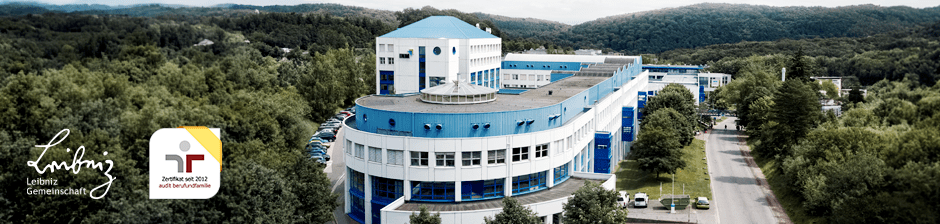
INM - Leibniz Institute for New Materials is located in Saarbrücken, Saarland, Germany, and is an internationally leading center for materials research, a scientific partner to national and international research institutions, and a provider of research and development for companies throughout the world. The INM is an institute of the Leibniz Association and has about 250 employees.
The Marie Sklodowska-Curie Doctoral Network “e-ChemIn: ElectroChemical Interfaces for energy conversion and storage: towards a carbon neutral society" is recruiting 15 Doctoral Candidates (DCs). The e-ChemIn network brings 12 academic and 6 industrial partners from 9 countries formed an international, interdisciplinary and inter-sectoral team. 15 Doctoral candidates will enjoy a multi-disciplinary and international environment with plenty of training opportunities and exchange with all labs involved in the Network.
Scientific background
The climate targets set by the EU with the goal of climate neutrality by 2050 require a transformation of all sectors of the economy towards the use of renewables-based electricity, calling for joined forces between EU countries in order to achieve a more resilient energy system. In the e-ChemIn we are united by the idea of applying a new paradigm in designing energy devices, which shifts the current approach of creating individual materials towards engineering electrochemically ACTIVE MATERIALS INTERFACES. Working together we will 1) design multiple sets of electrochemical interfaces using renewable, abundant, and circular materials and optimize them for new generations of energy conversion and storage devices. Created lab-scale prototypes which outperform characteristics of current benchmarks and will be ready for further developments at high TRLs (5-9); 2) develop multimodal approaches for the characterization of interfaces operando at the nanoscale, providing unprecedented insights into interfaces in action and making the characterization of active interfaces accessible to the broader scientific community; 3) successfully establish processes for the recovery of critical raw materials from end-of-life devices and apply them at the industrial scale.
MSCA-DN e-ChemIn - Doctoral Candidate (DC3): Understanding ion adsorption and transfer in electrodes on the nanoscale (f/m/d)
Job description - Objective
You will develop operando scanning TEM (STEM) and EELS approaches to characterize adsorption phenomena and the formation of the electric double layer with the highest spatial resolutions reported. You will use room-temperature ionic liquids (ILs) as electrolytes and test their
(1) structuring in nanoconfined environments of different dimensionality (e.g., inside carbon nanotubes, 3D porous carbons),
(2) behavior under applied bias in confinement.
Spatially resolved data from STEM and EELS will be correlated with volumetric measurements from NMR and operando XPS, enabling direct observation, and quantification of charge storage mechanisms in electrode materials and processes of electrolyte degradation. In cooperation with DC5, who performs complementary atomistic simulations, you will work towards obtaining a comprehensive insights in the structure and dynamics at S-L interfaces at different states of charge.
Expected results:
(1) Deep understanding of electrolyte behavior in nanometer confinements.
(2) Design of a correlative setup (EELS, XPS) to study the electronic structure of interfaces.
Profile
The selected candidate will be required to enroll in a PhD program at Saarland University.
Supervisors - Benefits - Qualifications:
Main supervisor: Prof. Nadja Tarakina (INM, https://www.leibniz-inm.de/en/innovative-elektronenmikroskopie/ )
Co-supervisor: Prof. R. Mom (ULEI, https://www.universiteitleiden.nl/en/staffmembers/rik-mom/publications#tab-2 )
Co-supervisors from secondments:
Dr. N. Krans (Protochips, https://www.protochips.com/ ),
Prof. Dr. P. Yushmanov (P&L Scientific, https://plscientific.se/ )
You will study interactions between IL and carbon anodes under biasing conditions in an NMR cell at P&L (5 months); as well as design the correlative TEM and XPS to reveal the electronic structure of IL-carbon anode interfaces at ULEI (3 months).
Applicants must not already hold a doctoral degree at the date of recruitment. Applicants must not have resided or carried out their main activity (work, studies, etc.) in Germany for more than 12 months in the 36 months immediately before the recruitment date.
Eligibility will be verified at the time of recruitment.
Skills/Experience
- Excellent communication and writing skills, thorough command of the English language.
- Good knowledge of electrochemistry, materials science.
- Skills in experimental electrochemistry and electrochemical technologies.
- Experience with material characterization using electron microscopy and / or spectroscopy techniques and corresponding data interpretation will be an advantage.
- Ability to work as a member of an international, multi-disciplinary team.
- German language knowledge is very beneficial.
Master’s degree or equivalent in Materials Science, Electrochemistry, Chemistry, Applied Physics or closely related disciplines.
Benefits
Salary - other benefits - duration
The salary will comply with the rules of the 2025 MSCA Doctoral Network program under Horizon Europe and consists of
- a living allowance (country correction coefficient applies)
- a mobility allowance (€710/month)
- and, if applicable, a family allowance (€660/month).
All amounts are subject to national taxation and social security regulations.
Other benefits
- Social security coverage
- Training, Networking and secondment opportunities
- Career development plan.
The position is funded for 36 months under the MSCA Doctoral Network. The total contract duration is 36 months. More information under https://euraxess.ex.europa.eu/jobs/search - Search: e-ChemIn.
Starting date: from 01.11.2026 but not later than 01.04.2027
Contract: temporary full-time employment contract in accordance with national regulations.
Working hours: full time - 39.5 hours per week.
Place of work: INM - Leibniz Institute for New Materials gGmbH is located in Campus D2 2, DE-66123 Saarbruecken, Saarland.
The knowledge of German is a plus but not a requirement as English is a main working language at INM.
Contact
Applicants must upload the following, specifying MSCA-DN e-ChemIN (DC3).
Please submit these documents:
- CV (including a detailed description of residence and main activities over the last 3 years)
- Motivation letter
- Copies of academic degrees
- Contact details of 3 referees.
Application deadline is: 20.09.2026
Recruitment will follow the MSCA Doctoral Network principles of:
- Open, transparent and merit-based selection
- Equal opportunities and non-discrimination
- Evaluation by a qualified selection committee.
Shortlisted candidates may be invited for interviews. The selection process will be properly documented in accordance with MSCA requirements.
The INM practices an open and appreciative corporate culture in which the existing diversity is promoted and lived. The institute is an equal opportunity employer with a certified family-friendly policy, and it provides offers for a better work-life balance, flextime, and mobile working. We promote professional opportunities for women and strongly encourage them to apply. People with disabilities are expressly encouraged to apply and will be given priority if equally qualified.
This will receive funding from the European Union’s Horizon Europe research and innovation program under the Marie Skłodowska-Curie grant agreement No. 101311389.

